
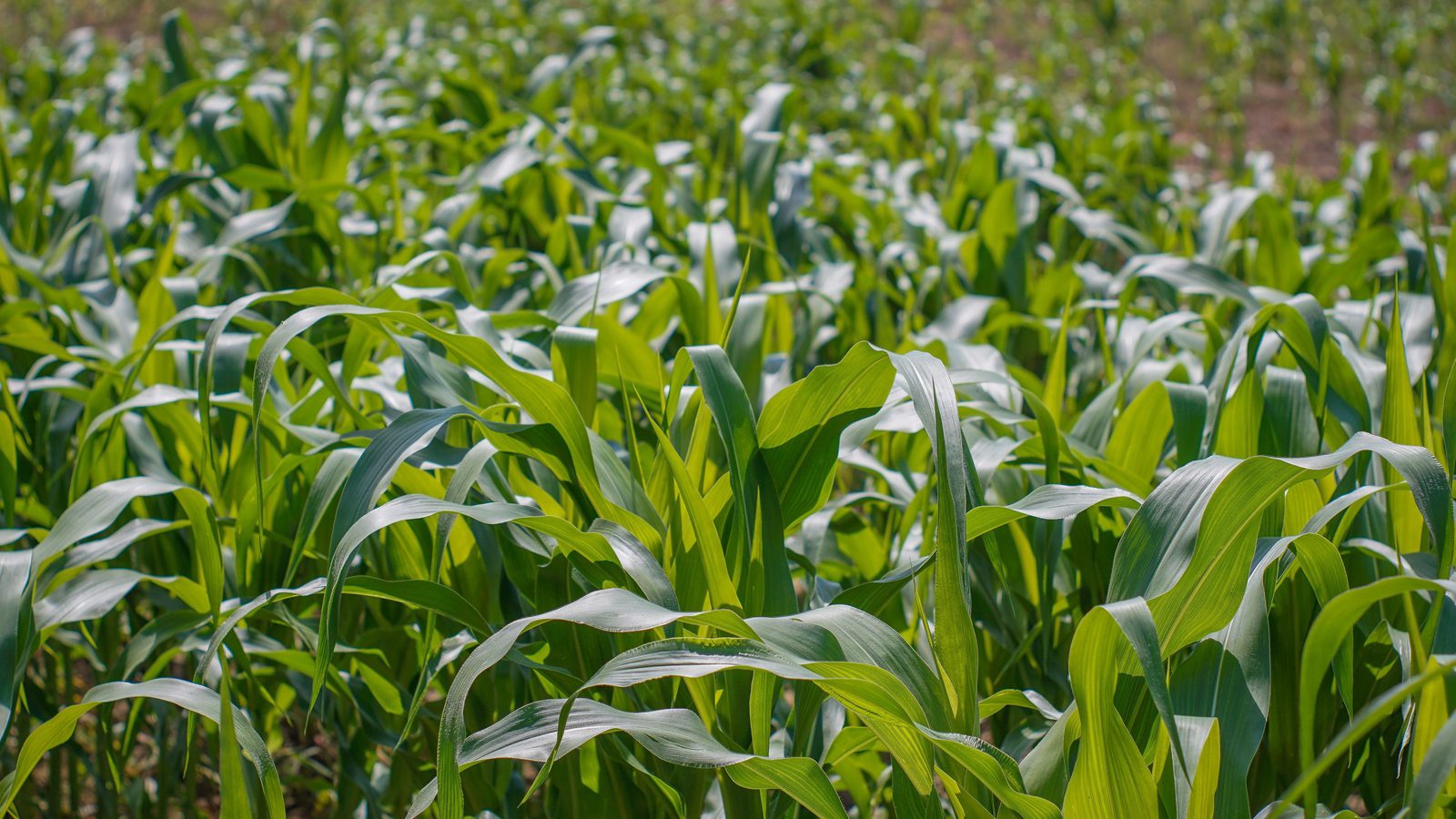
Across Zambia and much of southern Africa, smallholder farmers grow most of the food. They also harvest a fraction of what their land is capable of producing. The gap between the two is one of the most important, and most fixable, problems in the region.
It is tempting to explain low yields with a single cause, but the truth is a knot of overlapping ones. Pull on the threads and the same root keeps showing up: the soil itself is running on empty.
The yield gap
In Zambia, smallholders produce roughly 80% of the country's food. Yet the average maize harvest sits at around one to two tonnes per hectare, against an agronomic potential of six to seven. Put plainly, the same fields could grow three to four times more.1
Soil that has been mined, not fed
Every harvest removes nutrients from the ground. On healthy farms those nutrients are put back, through manure, compost, crop rotation, fallow periods, and the slow work of soil life. When land is cropped year after year without enough going back in, the soil is effectively being mined. The organic matter that gives soil its structure and its ability to hold water slowly disappears.
Much of the region's soil is naturally sandy and acidic to begin with. Strip out the organic matter on top of that and you are left with ground that drains too fast, holds few nutrients, and washes away in heavy rain. Seeds go in, but the soil simply cannot support a big harvest.
More fertiliser on dying soil is like more fuel in an engine with no oil.
The fertiliser paradox
The standard advice is to apply more synthetic fertiliser. It can help, and in the right amounts it is a useful tool. But for farmers here it runs into three hard problems.
The first is cost. Zambia produces almost no fertiliser of its own and spends more than 600 million dollars a year importing it.2 Prices are set on global markets that swing violently with every shock. Half of the world's urea moves through a single shipping chokepoint, and when it tightens, prices can climb fast.3 A smallholder has no buffer against that volatility.
The second is efficiency. Soil low in organic matter cannot hold onto nutrients. Much of the fertiliser a farmer can barely afford simply leaches away with the next rain before the crop can use it, ending up in groundwater and rivers rather than in the maize.
The third is the long game. Leaning heavily on synthetic fertiliser, especially nitrogen, year after year tends to push soils further toward acidity and does nothing to rebuild the organic matter or the soil life that were missing in the first place. The quick fix can quietly make the underlying problem worse.4
Climate piles on
Then there is the weather. Rainfall across the region is becoming less predictable, with longer dry spells and harder downpours. Poor soils are hit hardest, because they cannot hold water through a drought or absorb it during a flood. The same field that struggles in a normal year can fail outright in a bad one.
Why "just add more fertiliser" is not the answer
Put these threads together and a pattern emerges. The binding constraint is not only how many nutrients a farmer adds, but whether the soil can hold them, hold water, and support the life that makes everything else work. That is a question of soil health, and you cannot buy soil health by the bag.
Rebuilding it means putting organic matter back, improving the soil's ability to retain water and nutrients, and doing it in a way farmers can actually afford. This is exactly the space biochar and organic inputs are built for. Worked into the ground, biochar holds water and grips nutrients in place, so that whatever a farmer does add goes further. We wrote a whole piece on how that works.
A different starting point
ZamGrow's approach begins with the soil rather than the bag. By turning local sugarcane waste into fertilised biochar and wood vinegar, the aim is a soil-building product that improves retention, suits the region's tired and acidic soils, and is made in Zambia rather than shipped in at the mercy of global prices.
The yield gap is real, but so is the opportunity inside it. Close even part of it and you change what farming in this region can be.
References
- Smallholder share of output, maize yields and food security: FAO.
- Annual fertiliser import spend: UN COMTRADE (2024).
- Global urea supply concentration and price volatility: CSIS (Mar 2026); Fitch Ratings (Mar 2026).
- Soil acidification and organic matter decline under continuous synthetic fertiliser use: FAO soil health resources.