
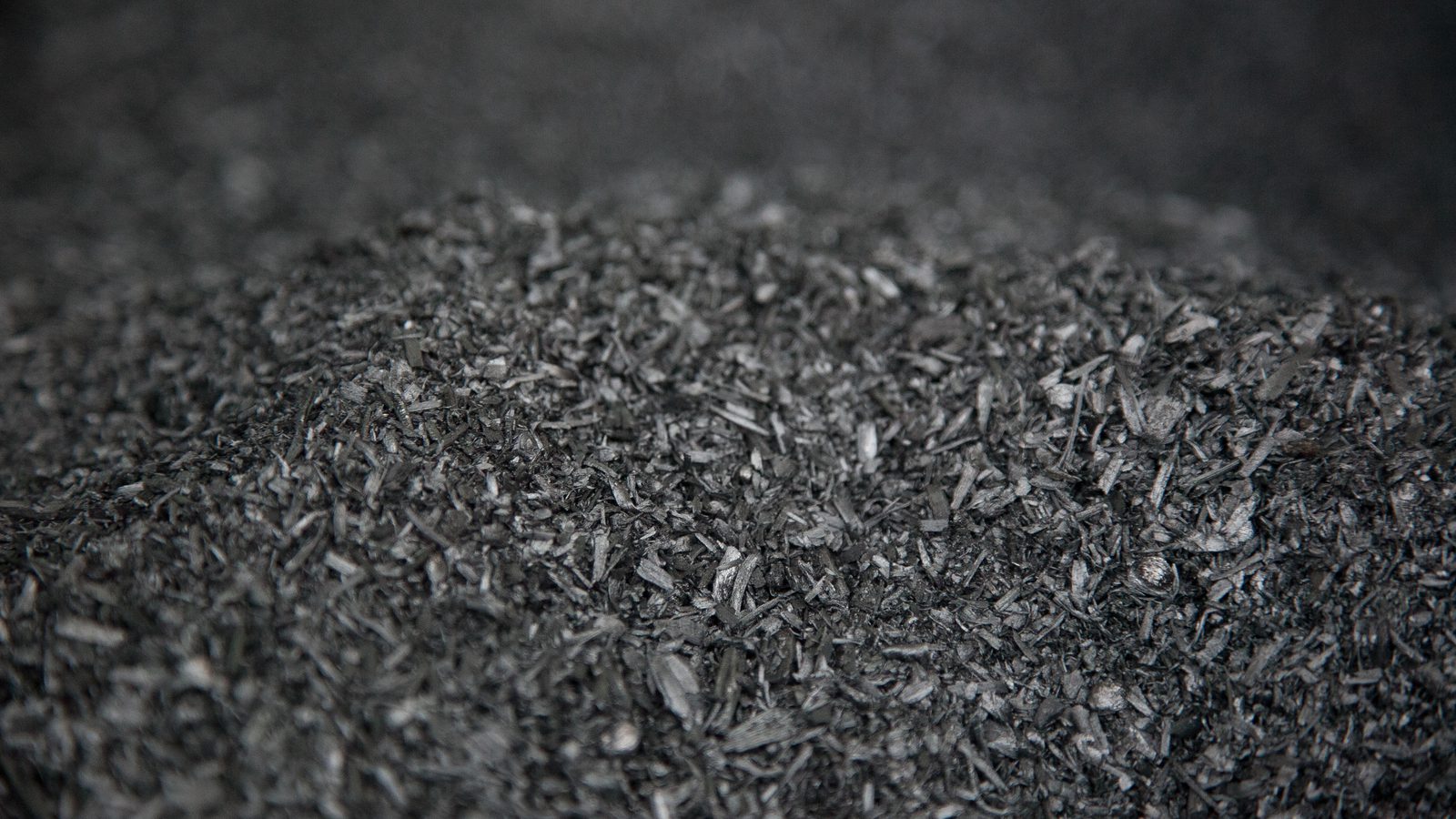
Deep in the Amazon basin there are patches of soil that should not exist. The land around them is thin, acidic and quick to wash away in the rain. But these patches, known as terra preta, or "dark earth", are rich, black and still remarkably fertile, even though the people who made them did so more than two thousand years ago. The secret ingredient was charcoal, worked into the ground season after season.1
That ancient practice has a modern name: biochar. It is one of the simplest ideas in agriculture, and also one of the most misunderstood. So let us walk through what it is, what it does, and why a company in Zambia is betting on it.
So what is biochar, exactly?
Biochar is charcoal made for the soil rather than for the fire. You make it by heating plant material, such as crop residues, wood, or sugarcane waste, to a high temperature with very little oxygen. Starved of air, the biomass does not burn away to ash. Instead it breaks down and leaves behind a light, black, carbon-rich skeleton. This process is called pyrolysis.
That last detail matters. Biochar is not the same as the ash left over after a fire, and it is not quite the same as the charcoal you cook with. What sets it apart is the intention and the control: it is produced at a known temperature, from known material, specifically so that it will do useful work underground.
What biochar does in the soil
Look at a piece of biochar under a microscope and you will see something closer to a coral reef than a lump of coal. It is riddled with tiny pores, which gives a single gram an enormous internal surface area. That structure is the whole point.
Worked into the ground, that porous structure behaves like a sponge. It holds onto water during dry spells and releases it slowly, which is a real advantage where rainfall is erratic. It grips onto nutrients so they are less likely to wash away with the next downpour, which means less fertiliser is wasted. It offers shelter to the bacteria and fungi that make healthy soil work. And on the acidic, depleted soils common across much of southern Africa, it can help nudge the pH back toward a range where crops actually thrive.2
One honest clarification. Biochar on its own is not a fertiliser. Fresh biochar is mostly a soil conditioner, an improvement to the home that nutrients live in. That is why it is often "charged" with nutrients first. The biochar then carries those nutrients into the soil and holds them in place, releasing them gradually rather than all at once. This is what we mean by fertilised biochar.
Biochar is carbon removal you can hold in your hand.
The carbon you can hold
Here is where biochar does something genuinely unusual. Every plant pulls carbon dioxide out of the air as it grows. Normally, when that plant dies and rots, or is burned, most of that carbon goes straight back into the atmosphere. Pyrolysis interrupts the cycle. It converts a large share of the plant's carbon into a stable form that resists breaking down for decades, and often far longer.3
So when biochar goes into a field, the carbon goes with it and stays put. That is why carbon registries now recognise biochar as a measurable form of carbon removal, and why it has become one of the few climate solutions that also happens to make a farmer's land more productive.
Why this matters here
For a smallholder farming sandy, acidic, exhausted soil under an unpredictable sky, the benefits of biochar stack up in exactly the places that hurt most: more water held through dry spells, fewer nutrients lost to the rain, livelier soil biology, and steadier ground to build on.
It gets better when the raw material is waste. ZamGrow makes its biochar from sugarcane bagasse, the fibrous pulp left after the juice is pressed out. It is abundant, cheap, and would otherwise pile up or be burned. Turning it into biochar means the process does not compete with food crops or standing forests. A waste problem for the sugar mills becomes a soil solution for the farmers.
A fair word of caution
Biochar is not magic dust. Its quality depends on what it is made from and how carefully it is produced. It works best alongside good nutrient management and organic matter, not as a replacement for them. And its full benefits build over several seasons rather than appearing overnight. Anyone promising instant miracles is overselling it.
What biochar offers instead is rarer and more durable: a way to rebuild soil and store carbon at the same time, using material we already throw away. That combination is exactly the bet ZamGrow is making, and it is why we think it is worth caring about.
References
- Amazonian dark earths (terra preta): Lehmann & Joseph, Biochar for Environmental Management (2nd ed., 2015).
- Soil, water and fertility effects of biochar: FAO, Biochar for Sustainable Soils (2017); IBI Biochar Standards.
- Carbon stability and removal: IPCC (2019); Puro.earth biochar methodology.